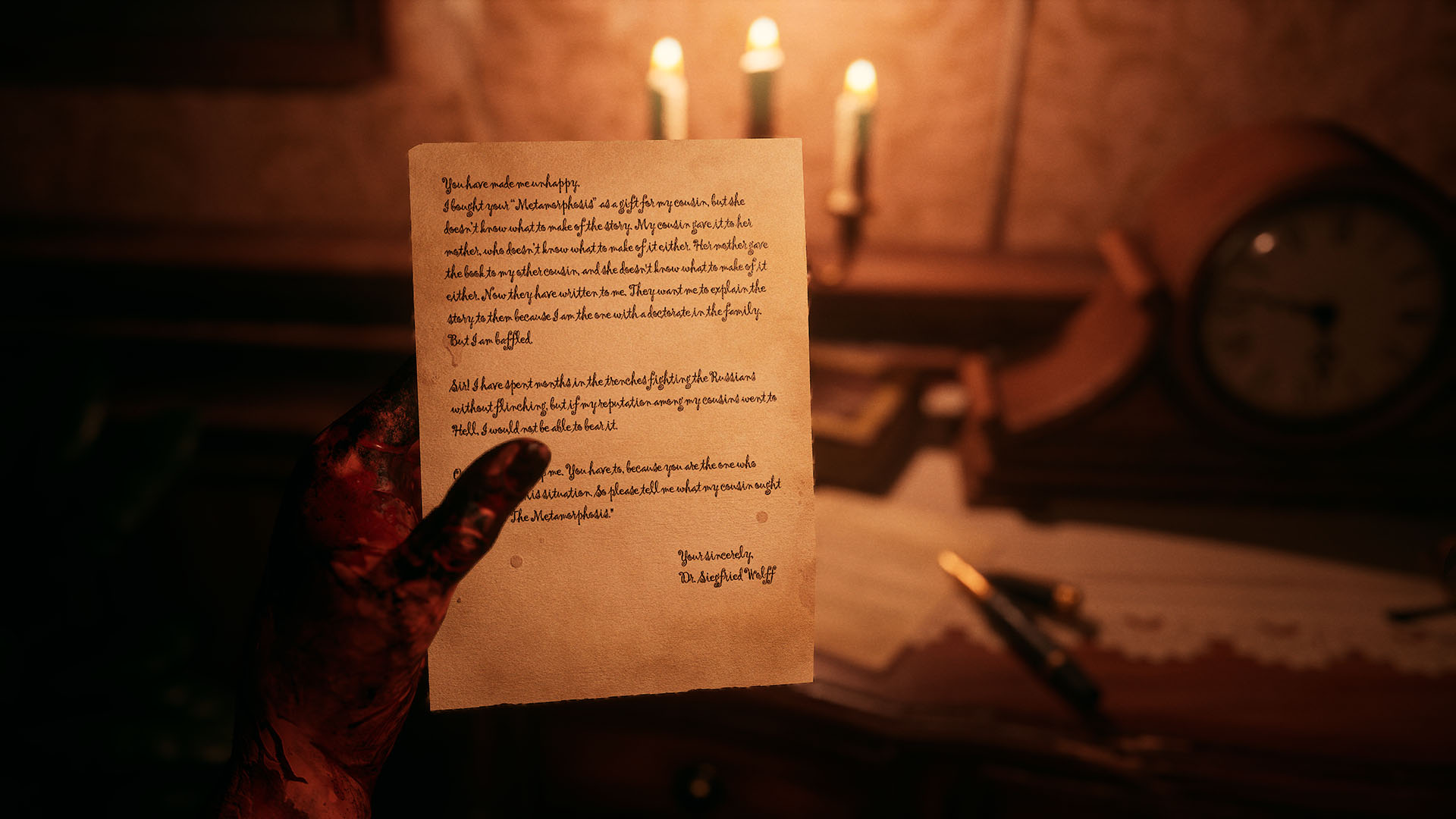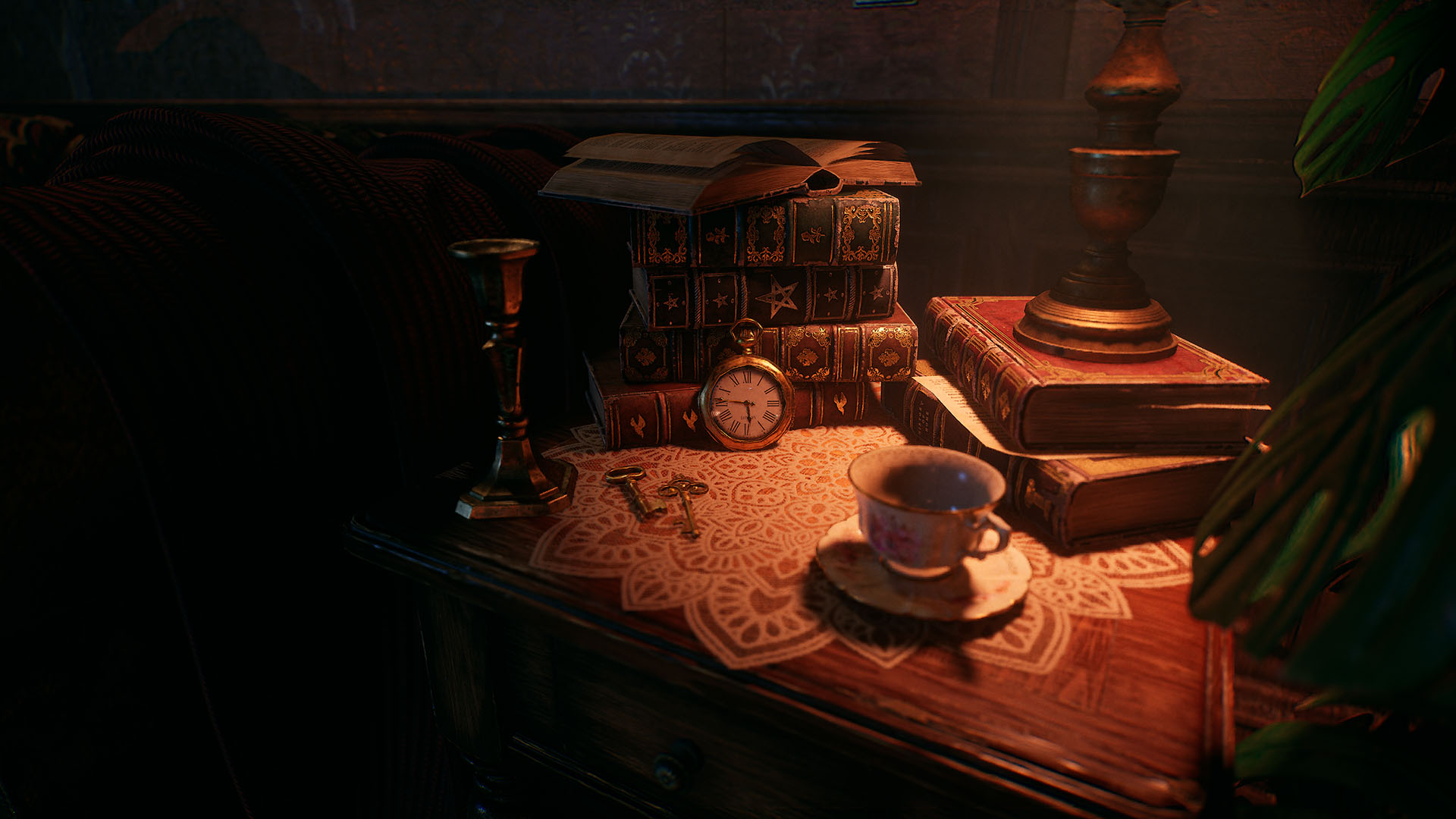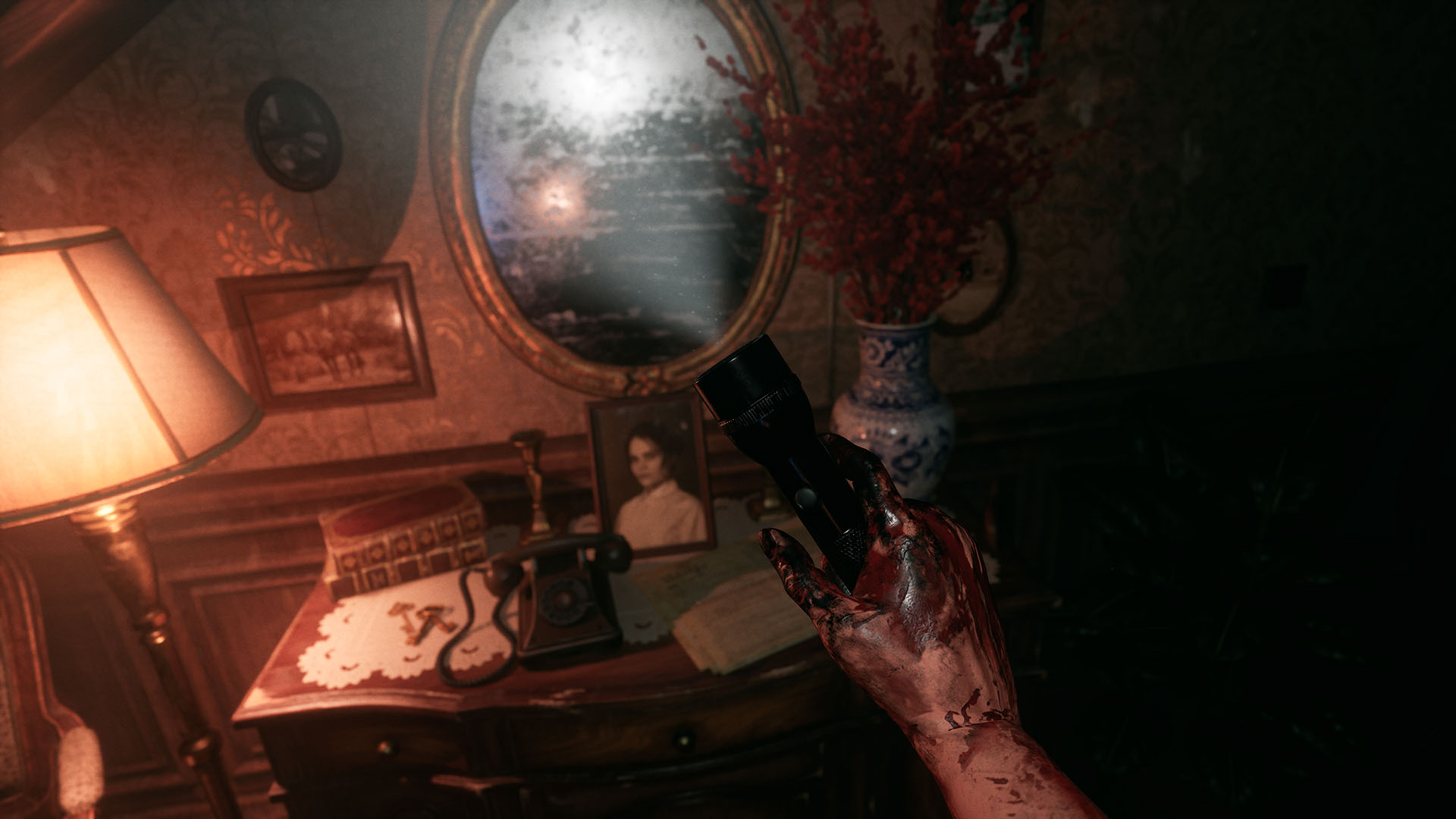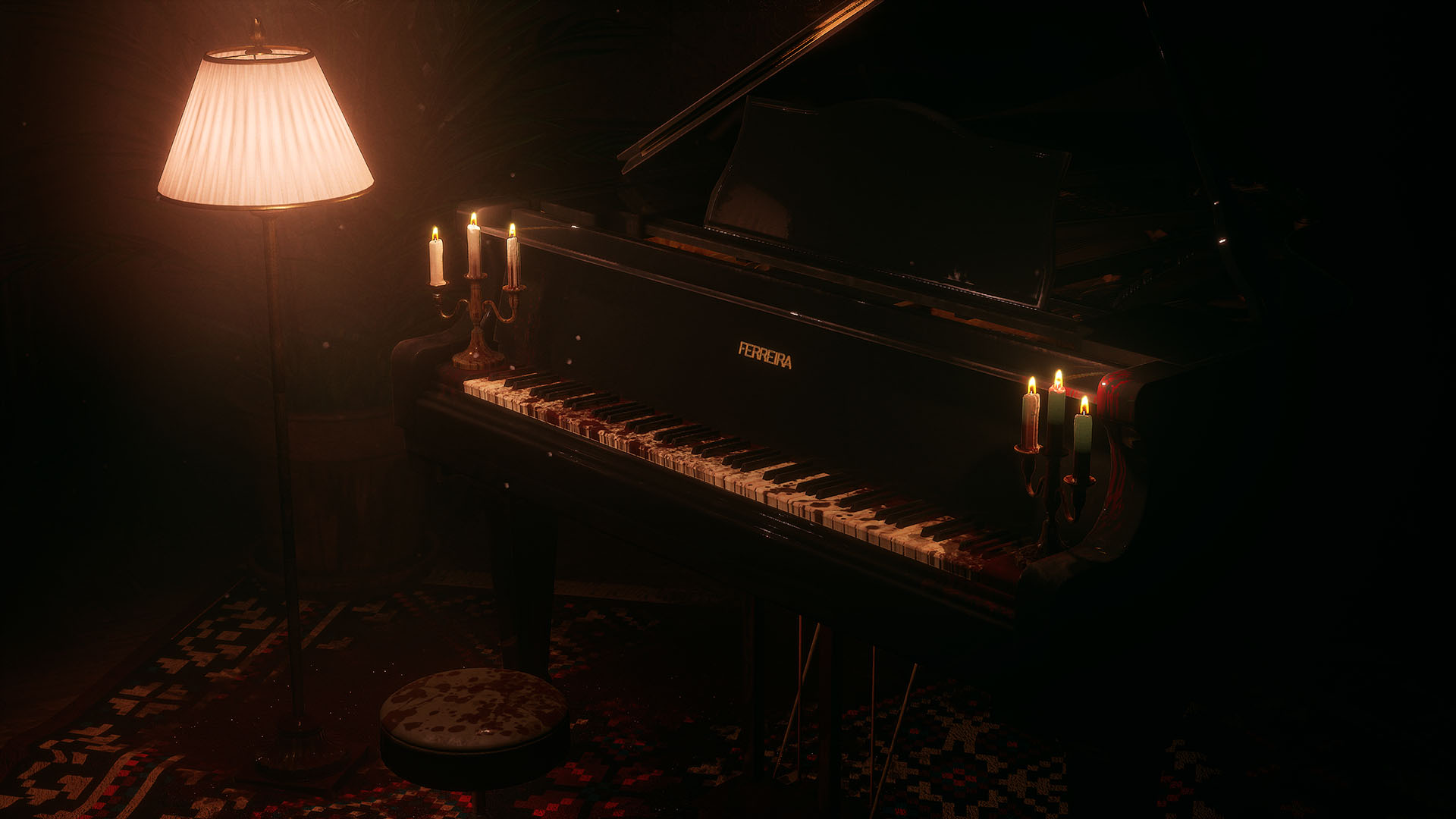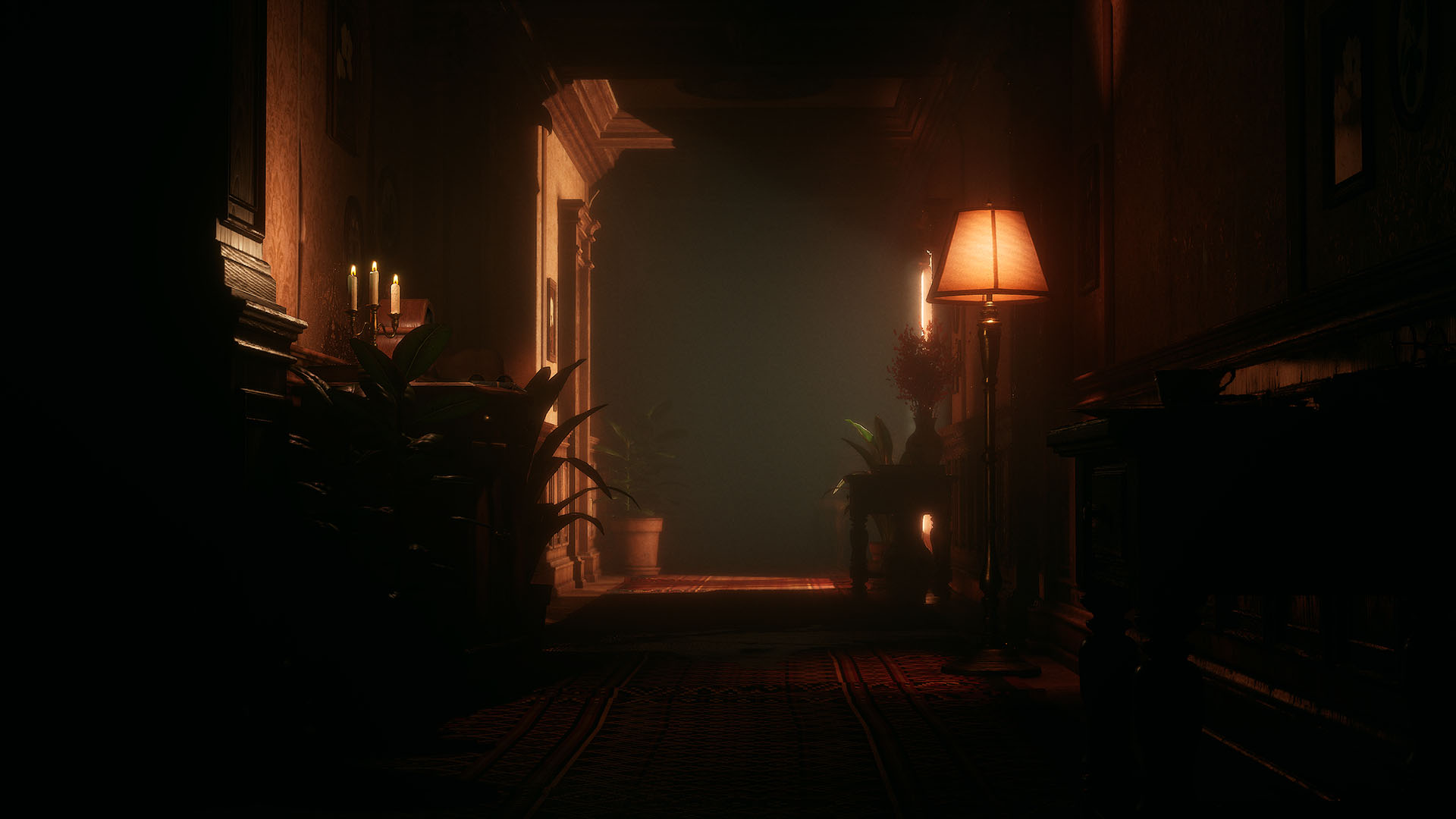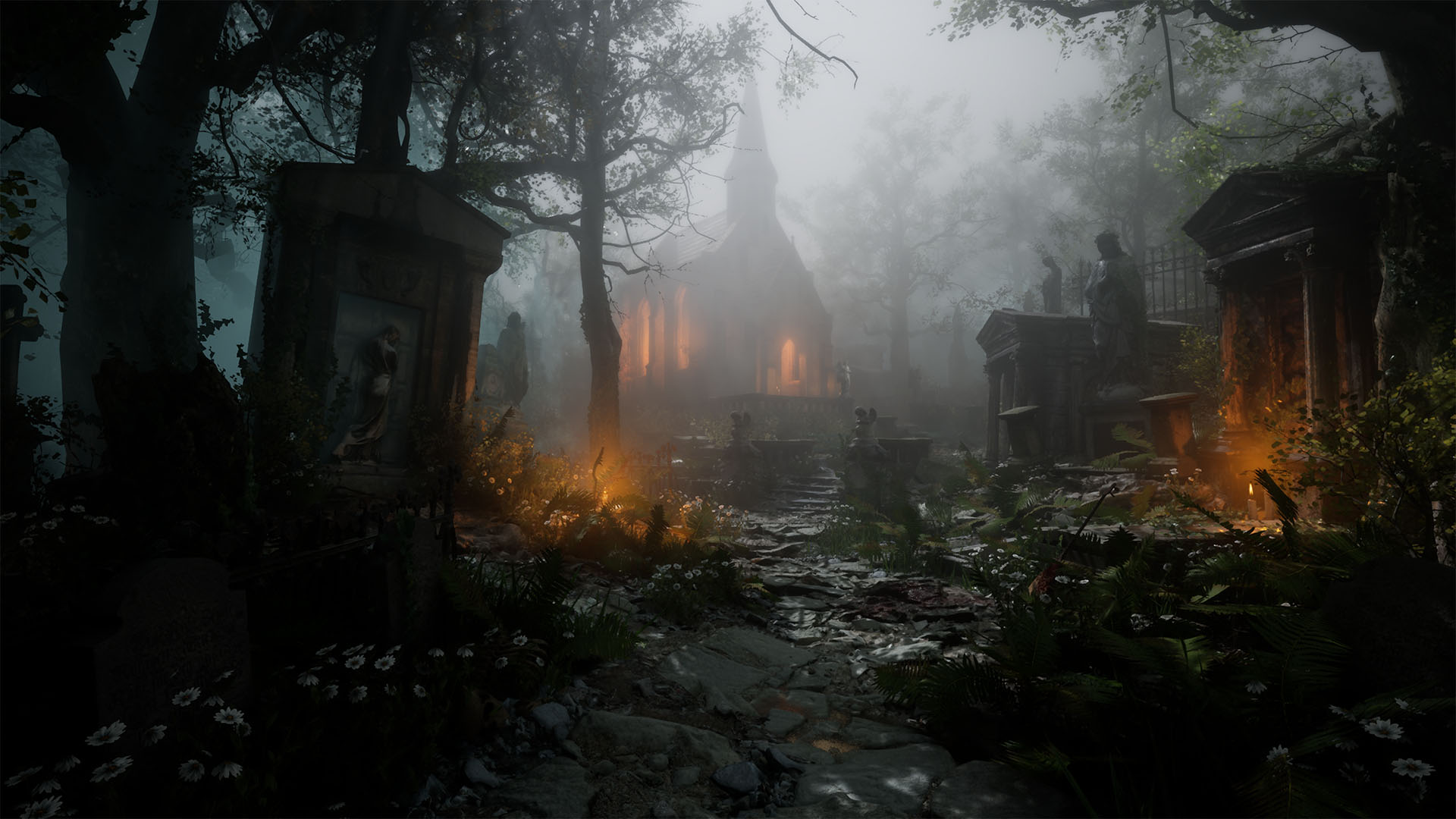
Real-time global illumination powered by UE5. Every light source casts dynamic shadows and reflections — no baked lighting, no compromises.
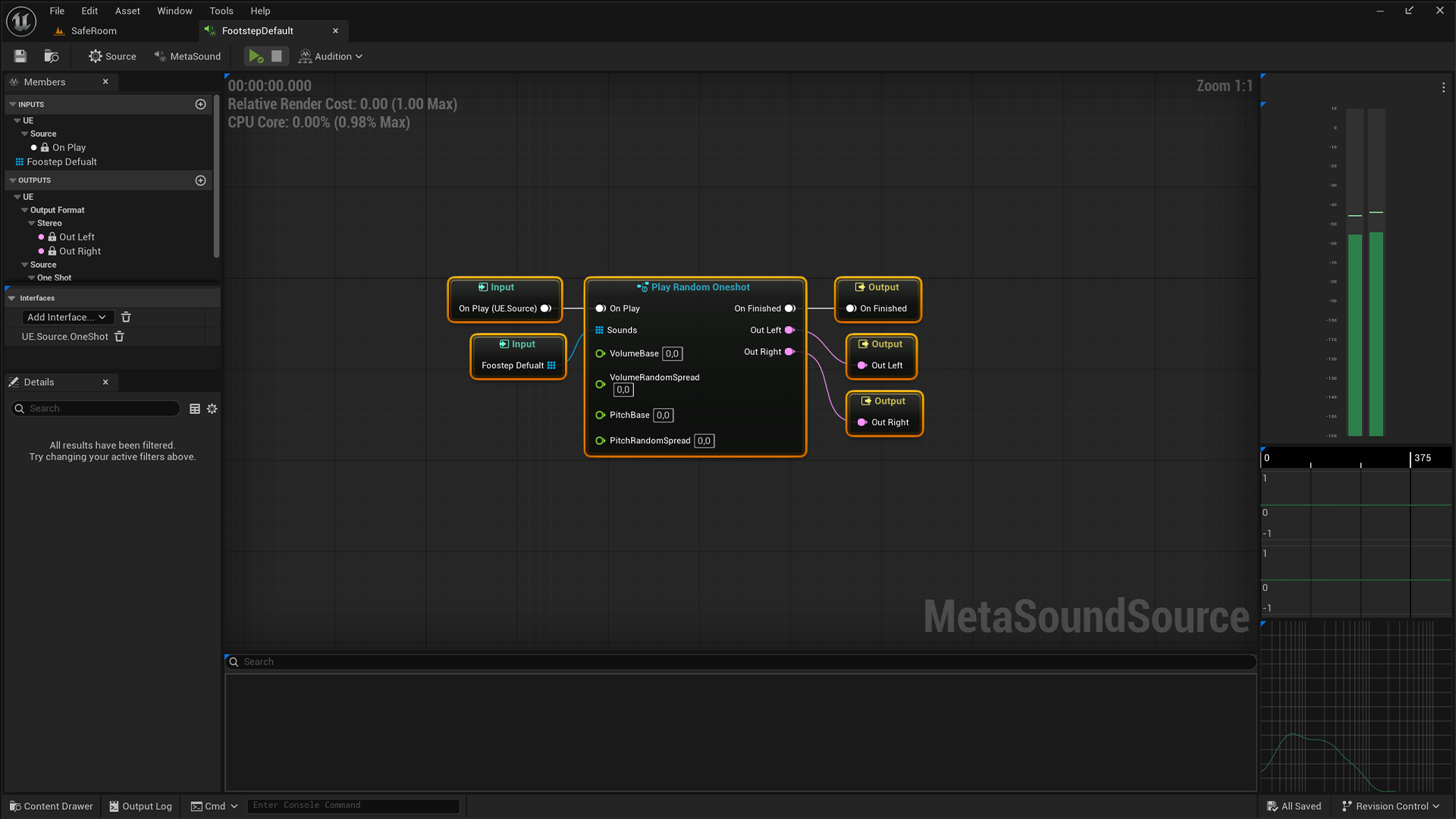
UE5 · Lumen · NaniteAudio is generated procedurally. Footsteps, creaks, echoes — all tied to geometry and reacting to what happens around you.
MetaSounds · UE5Item placement, open rooms and random events shift between runs. The route is familiar — but never the same. Puzzles have multiple solutions that shuffle each playthrough.
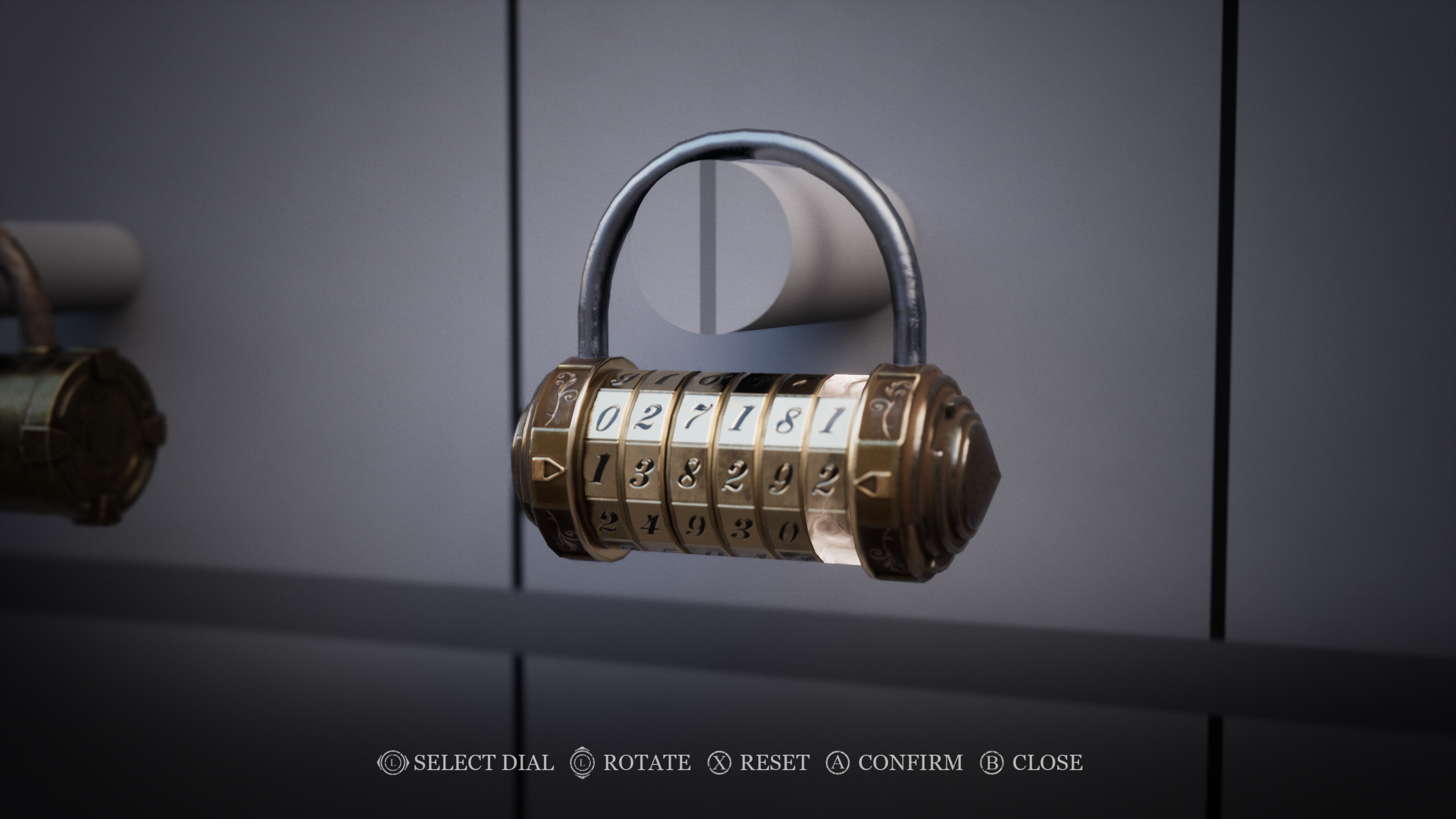
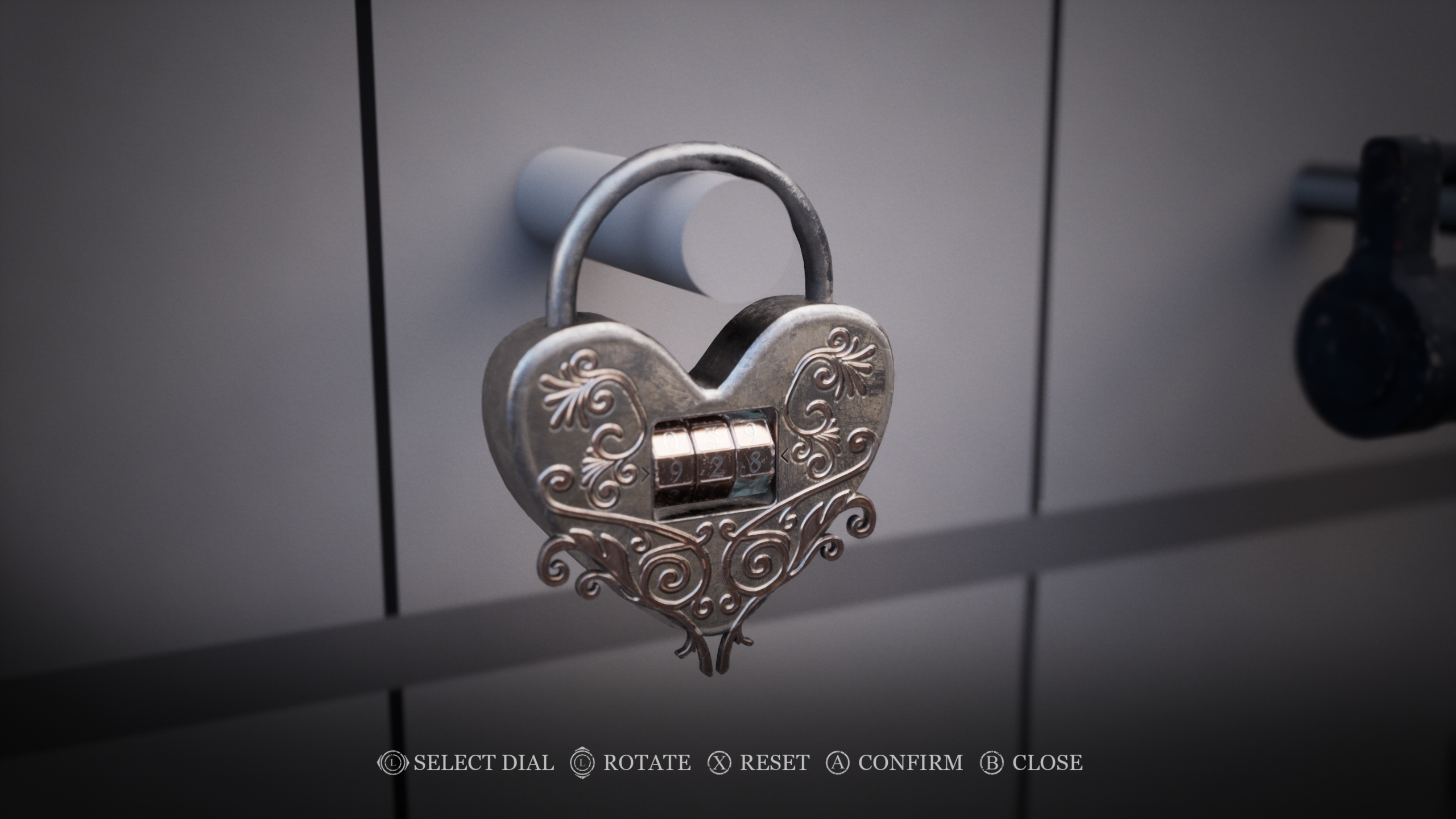
Non-linearImplemented a physical code padlock mechanic. The lock responds to direct input — you rotate the dial to enter the combination, feel the resistance, and hear it click open. Multiple instances are already placed throughout the environment, each with its own code and context. It's one of those interactions that sounds simple but makes the world feel genuinely tangible.
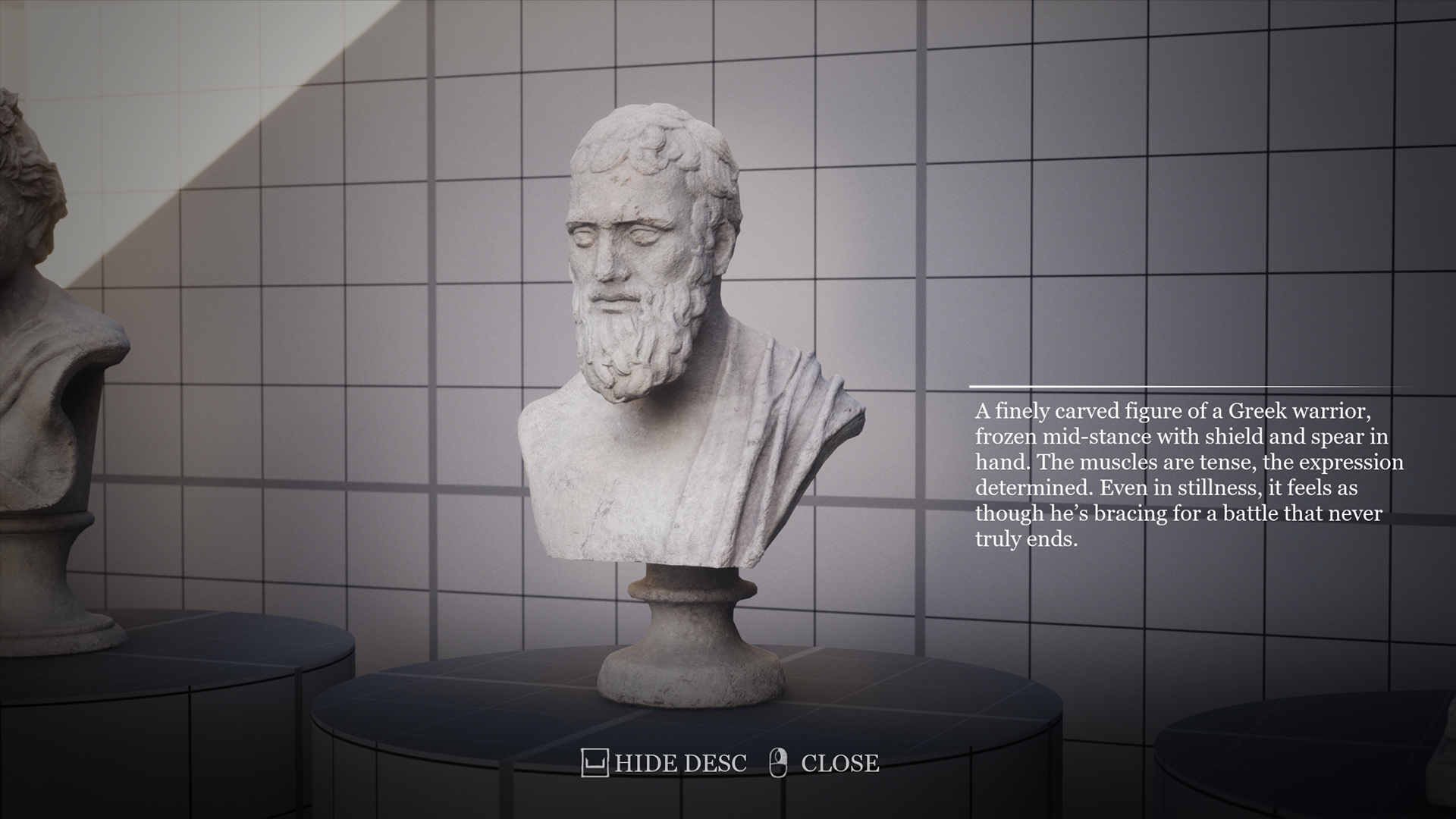
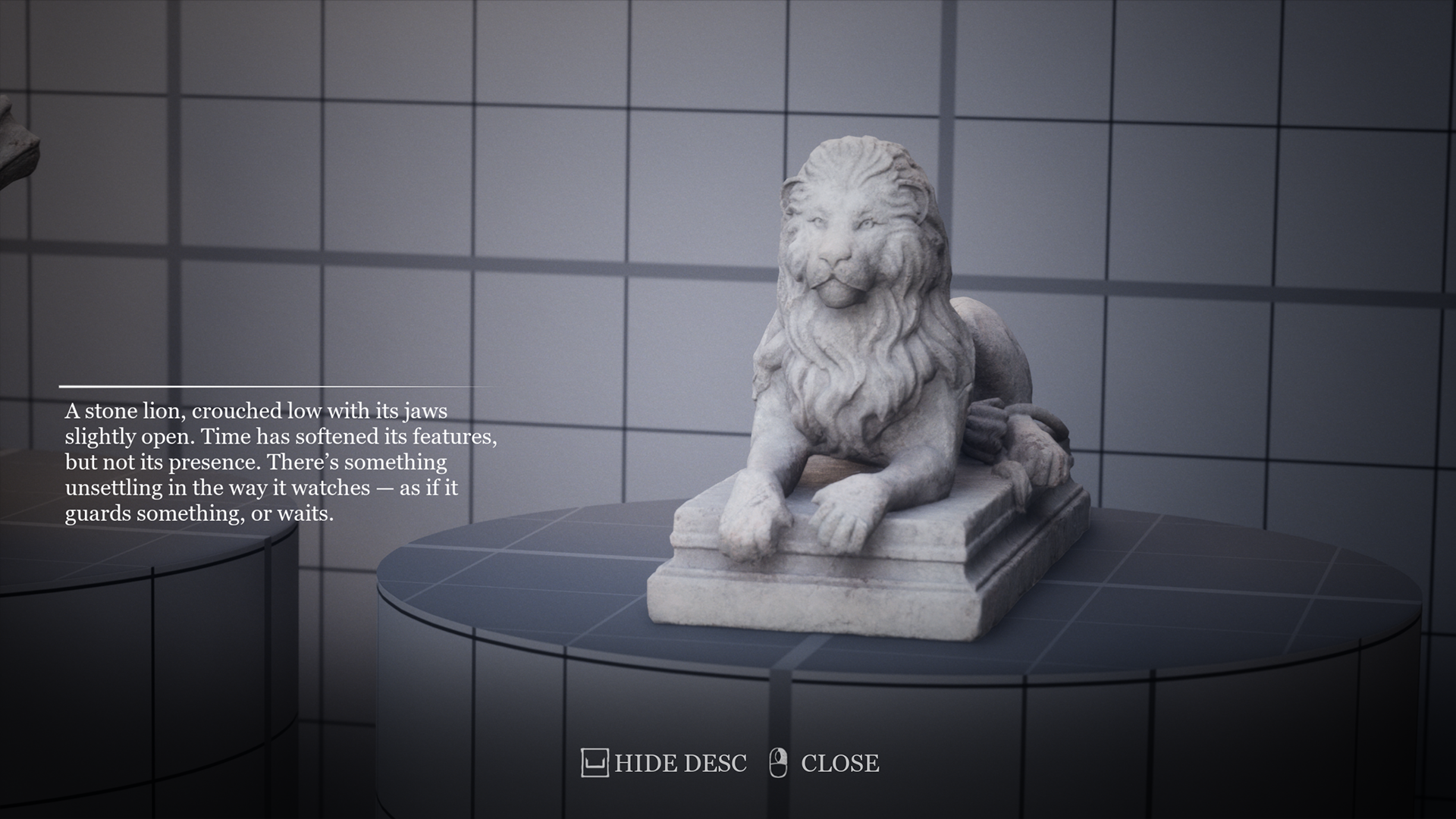
Added the ability to examine large objects up close. When you inspect something, a description appears with a typewriter animation accompanied by a subtle mechanical sound. The animation can be skipped instantly for those who don't want to wait — and the description can be dismissed at any time. A small detail, but it adds a lot to the feel of exploring the space.
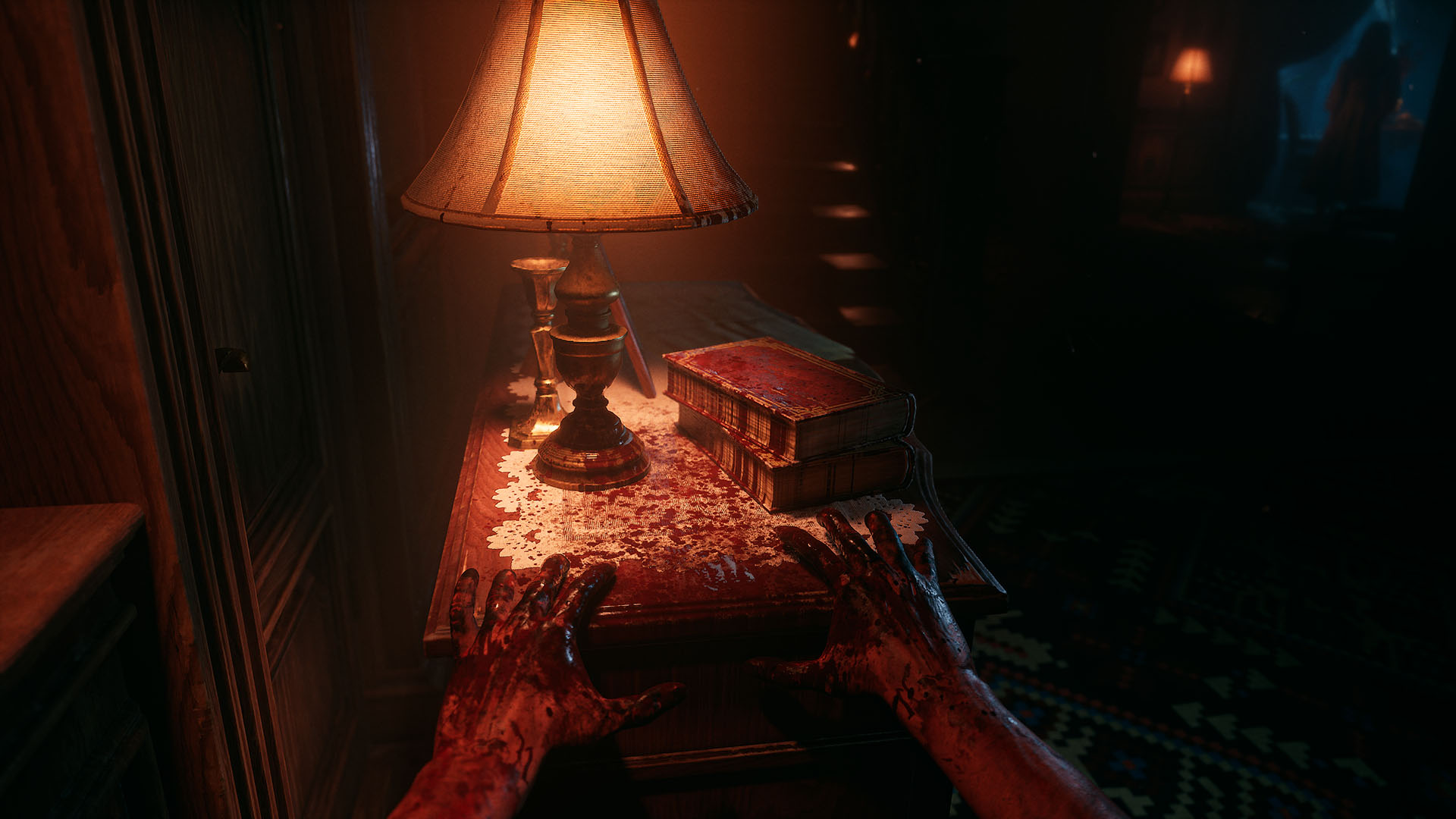
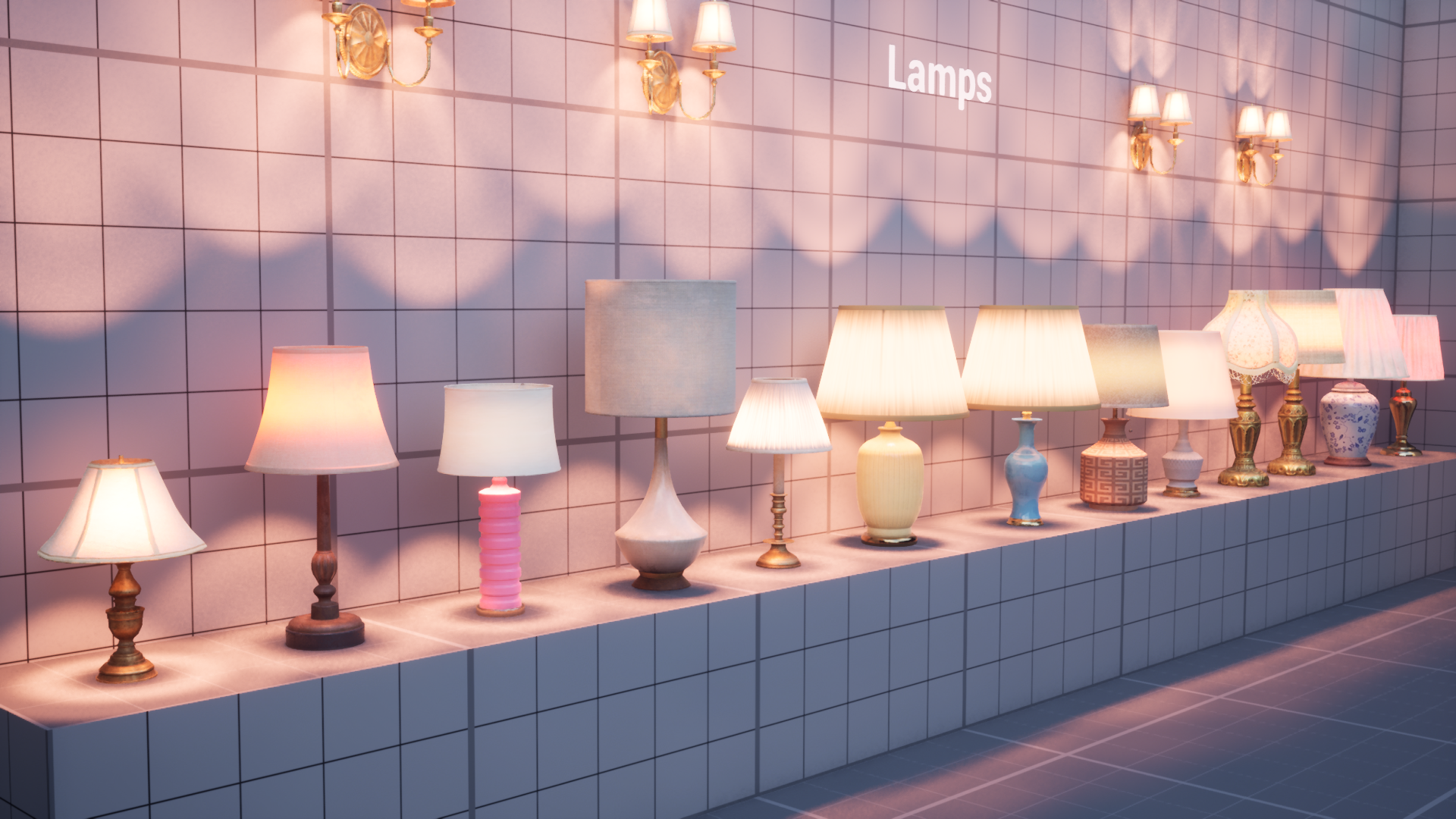
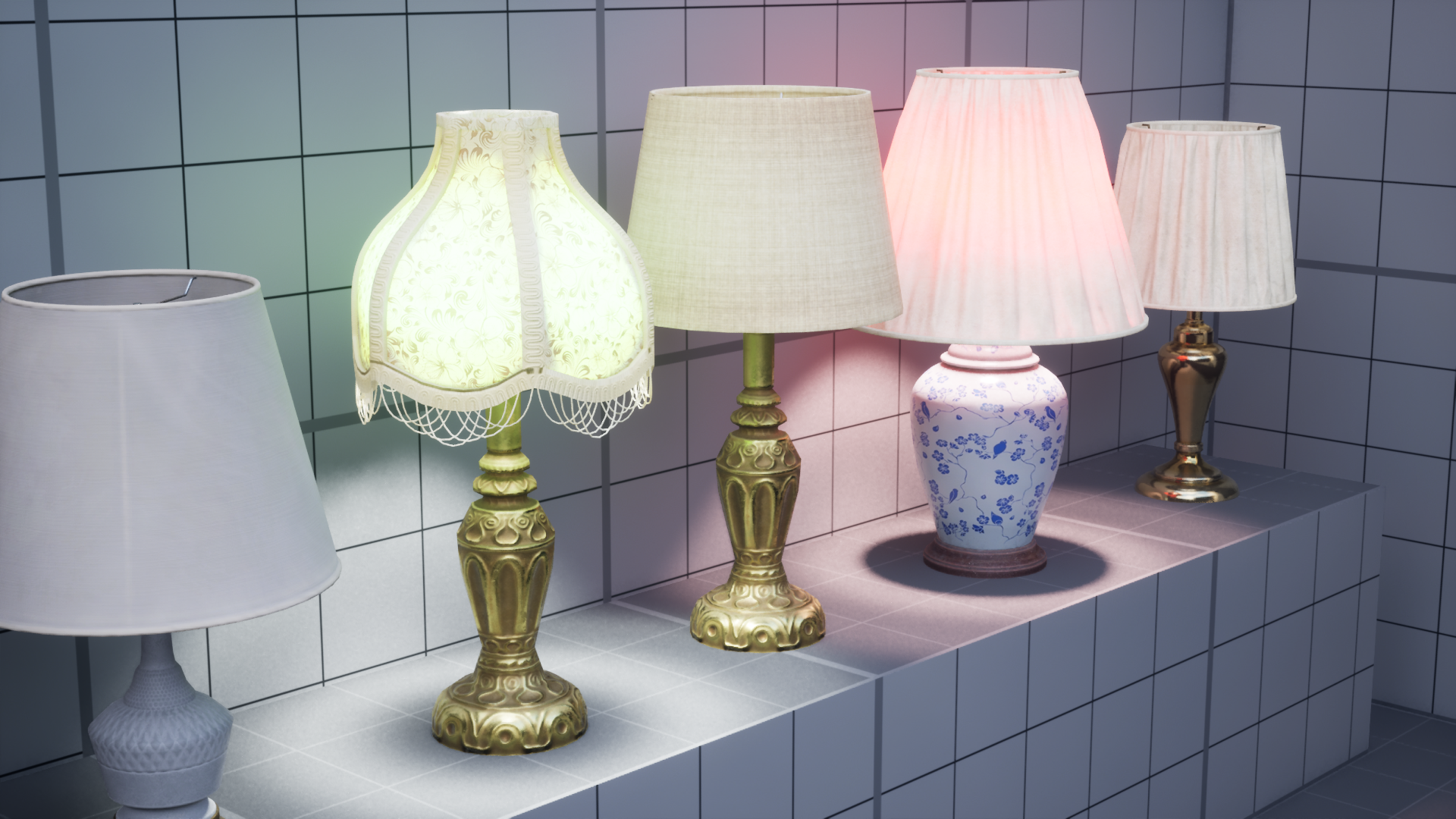
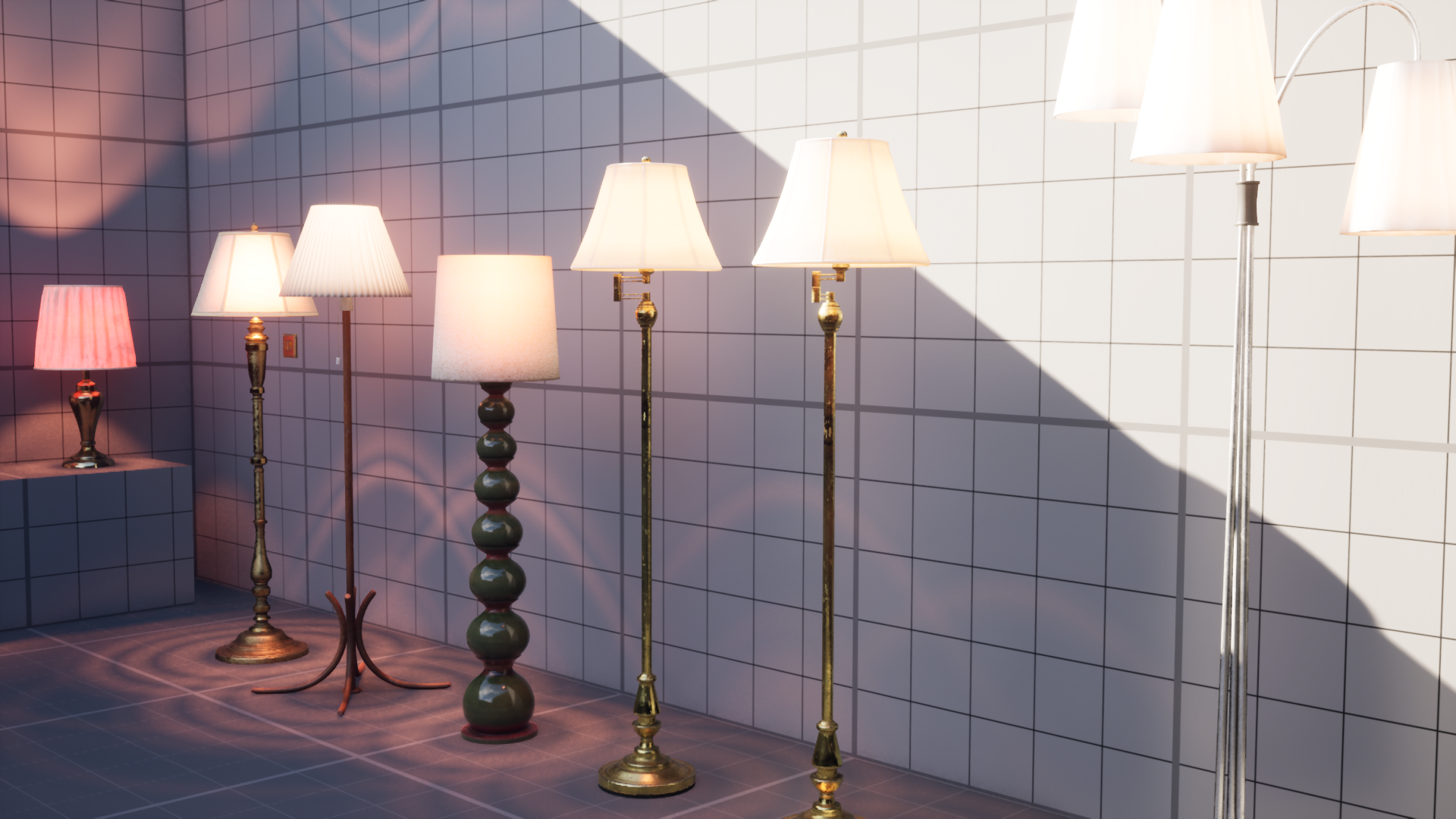
Created a wide set of unique lamp instances to make the game world feel more alive and each location feel distinct. Every room deserves its own light — its own mood. Small details, but they add up.
The entire audio system is being rebuilt from scratch using Unreal's MetaSounds framework. What used to be static audio files are now living, reactive graphs — sound that breathes with the environment, responds to the player's state, and degrades in ways that feel genuinely wrong. The difference in atmosphere is immediate.
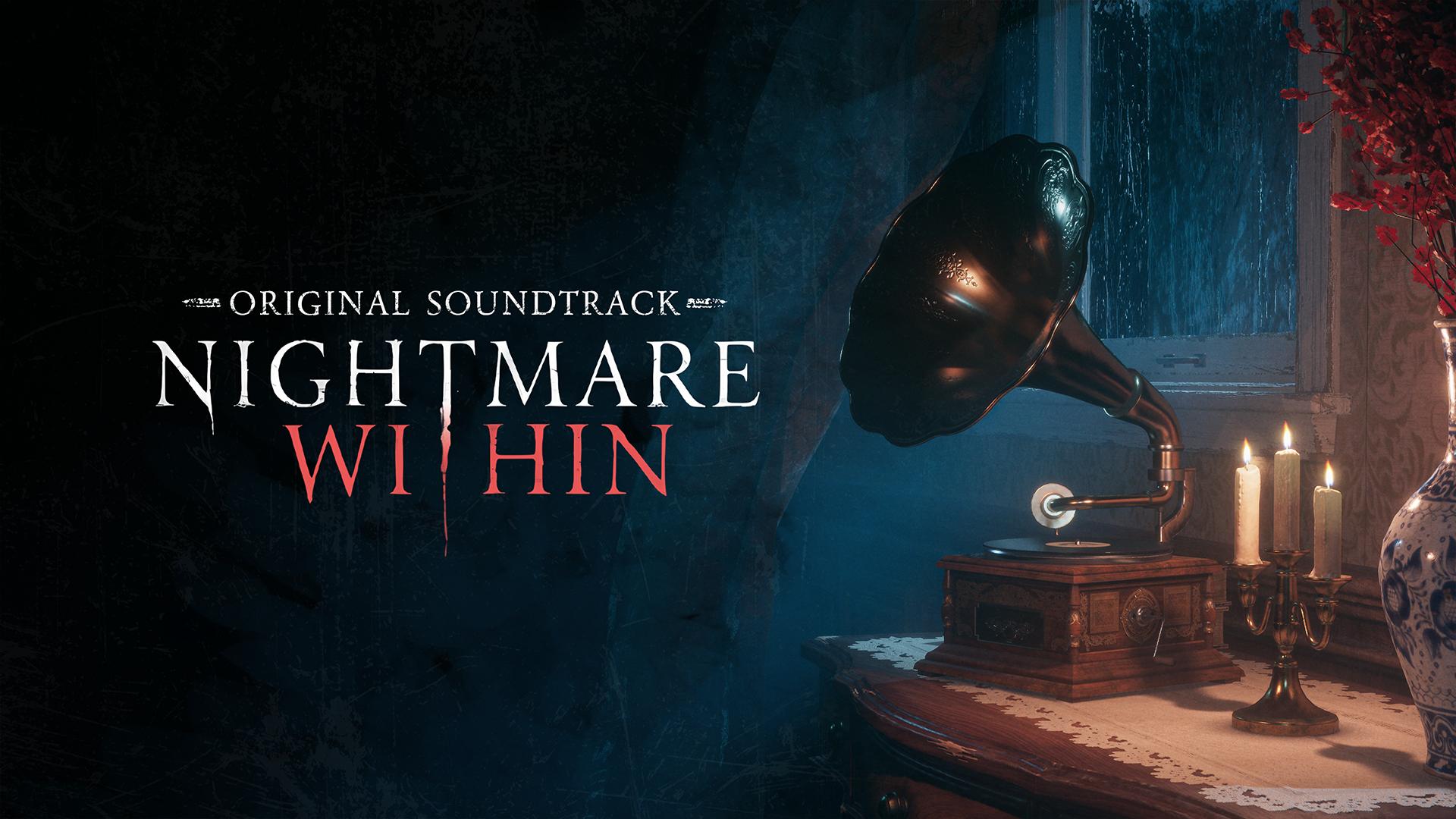
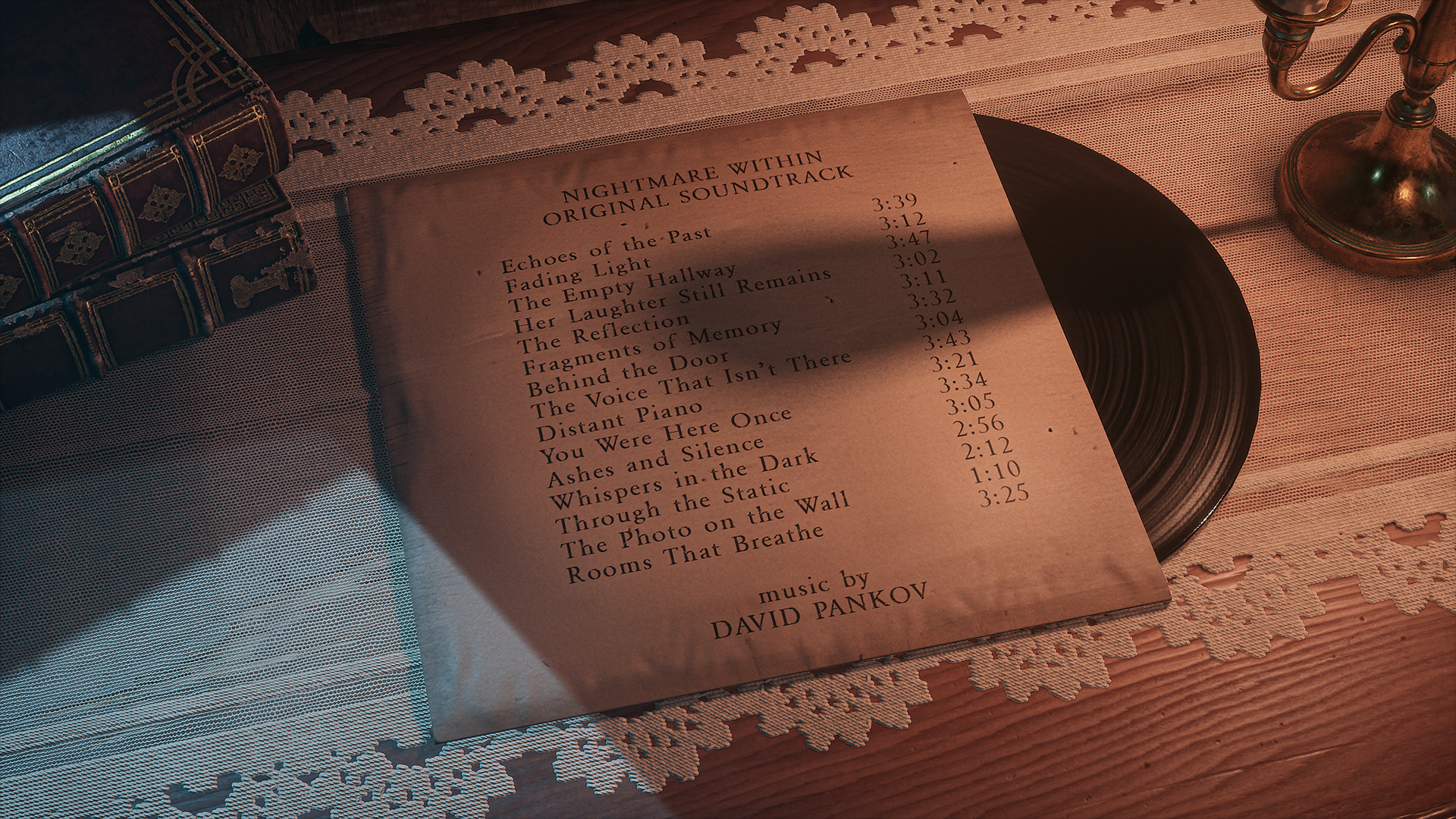
Started writing the original score in earnest. The album is built around a single piano motif that slowly unravels over the course of the game. Some tracks are ambient and barely there — others are not. Recording, composing, and sound design are all happening in parallel, which is chaotic in the best possible way.
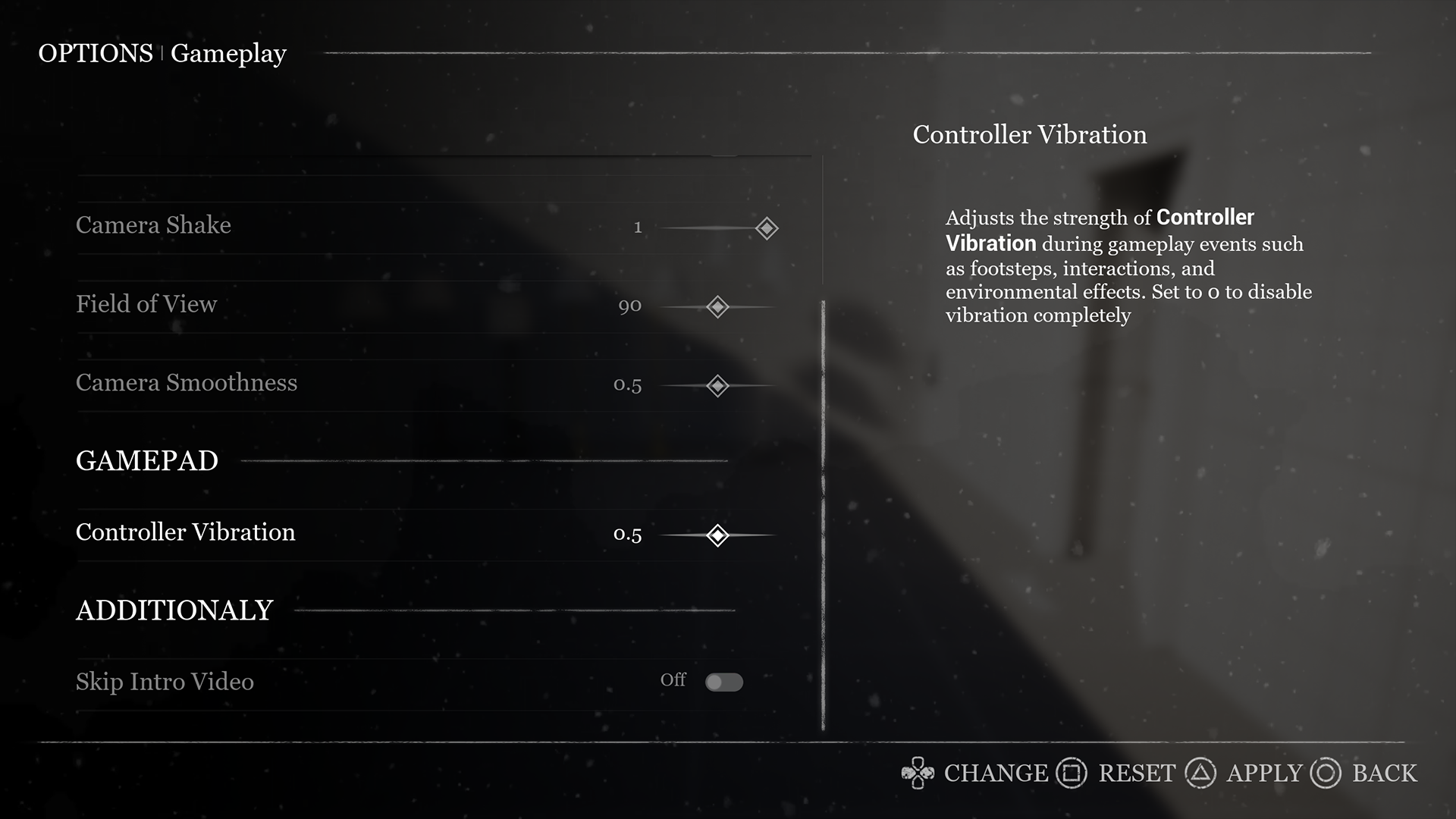
Added full support for Xbox and PlayStation controllers. This required rethinking several interaction systems that were built keyboard-first. The settings menu has also been significantly expanded — motion blur toggle, gamma, audio mixing, subtitle options. Small things that matter when someone sits down to actually play.

This month was unglamorous but necessary. Cleaned out several gigabytes of unused assets, deprecated blueprints, and leftover test content that had accumulated since early development. In parallel, went through all character and object animations — smoothing transitions, fixing foot sliding, tightening timing. The game feels more grounded now.
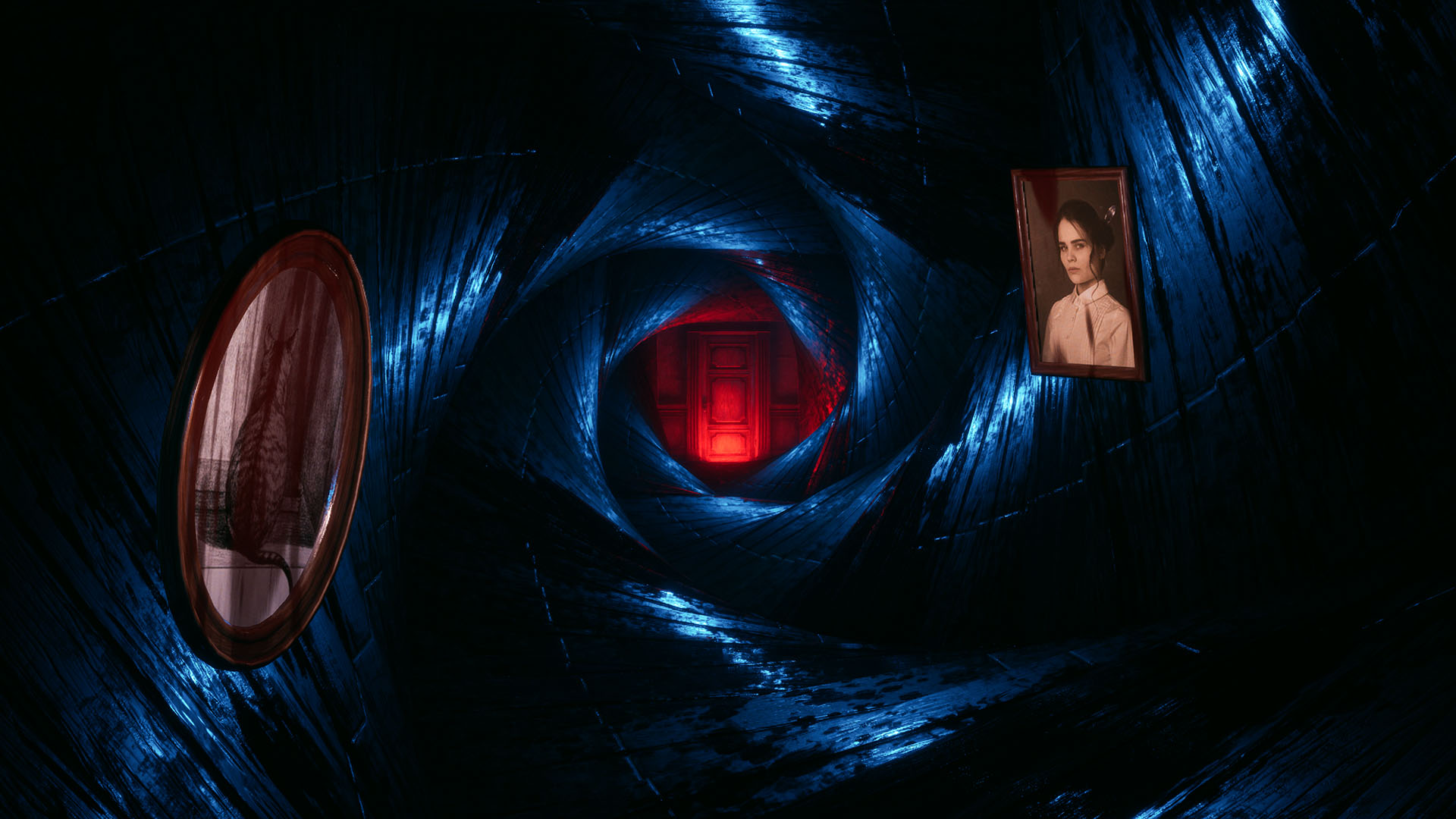
The foundation of the game is complete — exploration mechanics, psychological event system, environmental storytelling, and the protagonist's reactive behaviour. The loop is stable and feels exactly as intended.
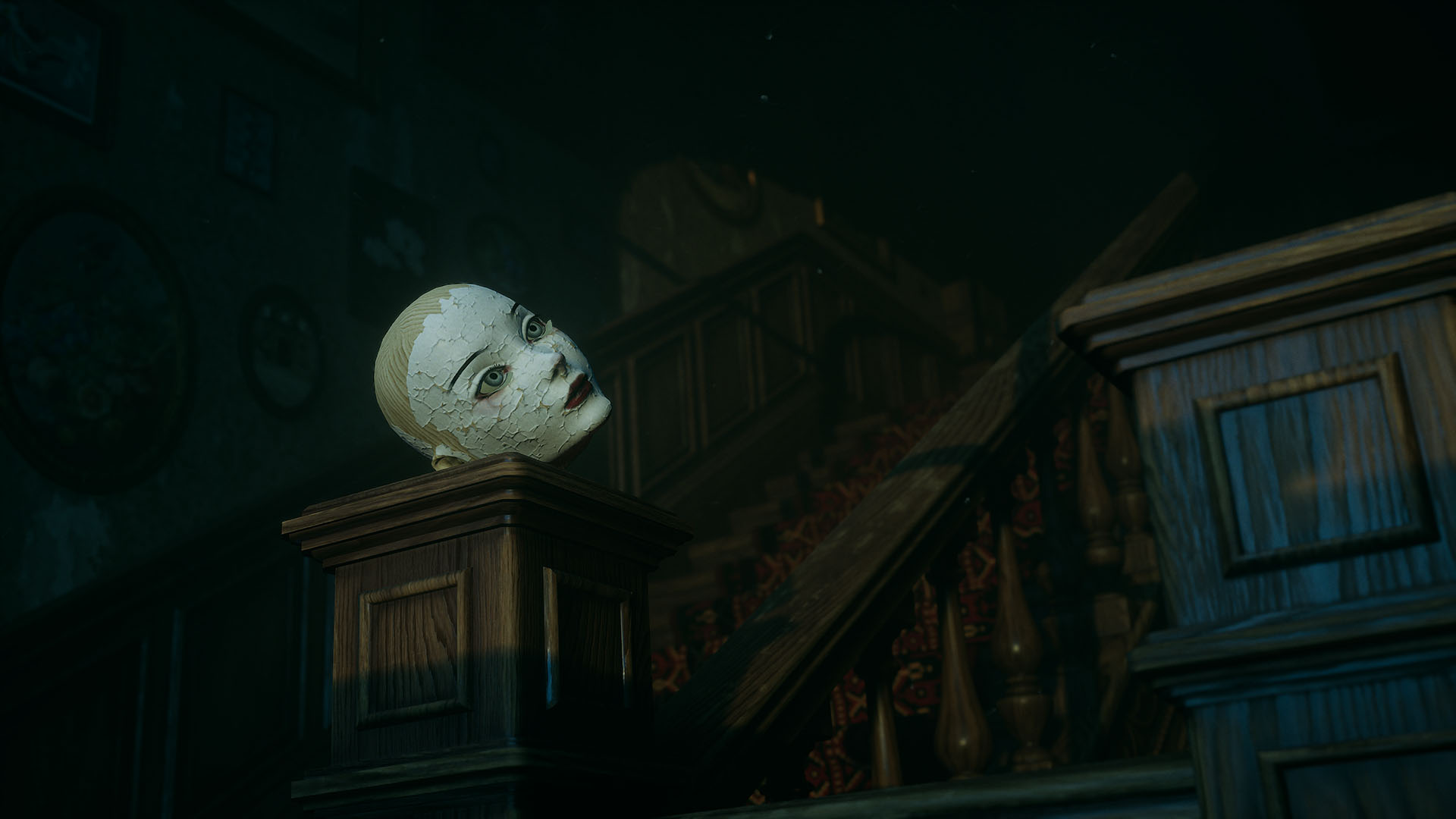
The main location — a two-storey family home — is actively being built out. Each room carries its own embedded history, with details that only become wrong when you start paying attention.
Half of the album is written and recorded. The score is built around a single degrading piano motif — familiar at first, then increasingly unrecognisable. The remaining half follows the same thread deeper.
A closed beta is planned before release. A small group of players will experience the game first — feedback on pacing, atmosphere, and technical stability will shape the final build.
Nightmare Within is planned for release on Steam in 2026. Add it to your wishlist to be notified the moment it launches.
A narrative expansion is being considered for after the base game release. A separate chapter — a different perspective on the same house, the same fear.